Para universidades, institutos, empresas y certificadoras
Certificados digitales que cualquiera verifica
Emite diplomas, certificados e insignias firmados criptográficamente — con identidad verificable del emisor y vigencia consultable en segundos, sin llamar a tu institución.
¿Te compartieron una chapita? Compruébala aquí:
 En vivo
Confían en OpenChapitas
Organizaciones que ya acreditan a su gente aquí
Cada logo enlaza a su vitrina pública: credenciales reales y verificables, no sellos decorativos.
 Comunidad IA LATAM2621 credenciales
 OT Security LATAM489 credenciales
 CISObeat Academy61 credenciales
 8.8 Academy59 credenciales
 CyberIAyuda Chile16 credenciales
 BugsCode9 credenciales
 PurpleTeam AcademyComunidad IA LATAM2621 credencialesOT Security LATAM489 credencialesCISObeat Academy61 credenciales8.8 Academy59 credencialesCyberIAyuda Chile16 credencialesBugsCode9 credencialesPurpleTeam Academy
Qué es una chapita
Un diploma que se comprueba solo
Es un diploma, certificado o insignia en formato digital, firmado con la identidad criptográfica de quien lo emite. Quien lo recibe lo comparte con un enlace o un QR, y cualquiera comprueba al instante quién lo emitió, a quién, y si sigue vigente.
Un PDF de siempre
- Se edita en dos minutos con cualquier editor.
- Para confirmarlo hay que llamar a la institución.
- Si caduca o se revoca, nadie se entera.
Una chapita
- Firmada: alterar un solo dato la invalida.
- Se verifica sola, sin llamar a nadie.
- Muestra en vivo si está vigente o revocada.
Míralo de cerca
Anatomía de una chapita
Esto es lo que recibe la persona y lo que cualquiera puede comprobar. Cada parte viene respaldada por una garantía criptográfica, no por nuestra palabra.

Certificación profesional
Asistente del 1er Congreso IA LATAM 2026
Comunidad IA LATAM
- Titular
- Egresado de ejemplo
- Programa
- Congreso 2026 · 20 h
- Identificador
- ffbed25c…39867d
Credencial real emitida por Comunidad IA LATAM — no un ejemplo ficticio.
- 01
Emisor verificado
Resuelto por el did:web de la propia institución, no por nosotros.
- 02
Doble firma criptográfica
Ed25519 y ML-DSA-65: una resistente a computadoras cuánticas.
- 03
Estado en vivo
Vigente, caducada o revocada — se comprueba al instante.
- 04
Enlace y QR propios
La persona la comparte donde quiera; conserva su página, su enlace y su QR.
El proceso, en tres pasos
Cómo funciona
Tu institución la emite
Desde la consola, firmas el certificado con la identidad digital de tu organización. Queda sellado: nadie lo puede alterar.
La persona la recibe
Le llega su chapita con una página propia, un QR y una insignia para su CV o LinkedIn. Puede conservarla y exportarla, sin depender de una cuenta.
Cualquiera la verifica
Un empleador, otra institución o quien sea comprueba en segundos que es real, quién la emitió y si sigue vigente. Sin crear cuenta.
Para quién es
Casos de uso
Cualquier organización que hoy entrega un certificado en PDF puede emitir chapitas verificables.
Universidades e institutos
Títulos y diplomas que el egresado comparte y cualquier empleador verifica sin llamar a la secretaría.
Bootcamps y centros de formación
Certificados de cursos y diplomados, con las competencias adquiridas y su marco de referencia.
Colegios y certificadoras
Acreditaciones y recertificaciones profesionales con vigencia y revocación en vivo.
Empresas
Capacitación interna y cumplimiento: quién completó qué, cuándo, y de forma auditable.
OTEC y organismos públicos
Certificación de competencias laborales que la persona lleva consigo, verificable por cualquiera.
Eventos y comunidades
Insignias de participación, ponencias y logros que se comparten con orgullo y no se pueden inventar.
Por qué es confiable
Prueba matemática, no promesa
Cada chapita lleva una doble firma criptográfica —Ed25519 y ML-DSA-65, esta última estandarizada por NIST (FIPS 204)—. Alterar un solo campo invalida ambas. Y no dependes solo de nosotros: la verificación resuelve la identidad de tu propia institución, así que puede comprobarse de forma independiente a esta plataforma.
eddsa-jcs-2022
Ed25519
mldsa65-jcs-2025
ML-DSA-65 · FIPS 204
did:web
raíz de confianza soberana
BitstringStatusList
no revocada · vigente
verificable offline vía did:web · sin cuenta
Casa de moneda digital
Acuñada, firmada y verificable
Cada chapita se emite como una pieza única: sellada con la identidad de tu institución y con doble firma resistente a lo cuántico. Colecciónalas — cada una suma, hasta convertirte en leyenda.
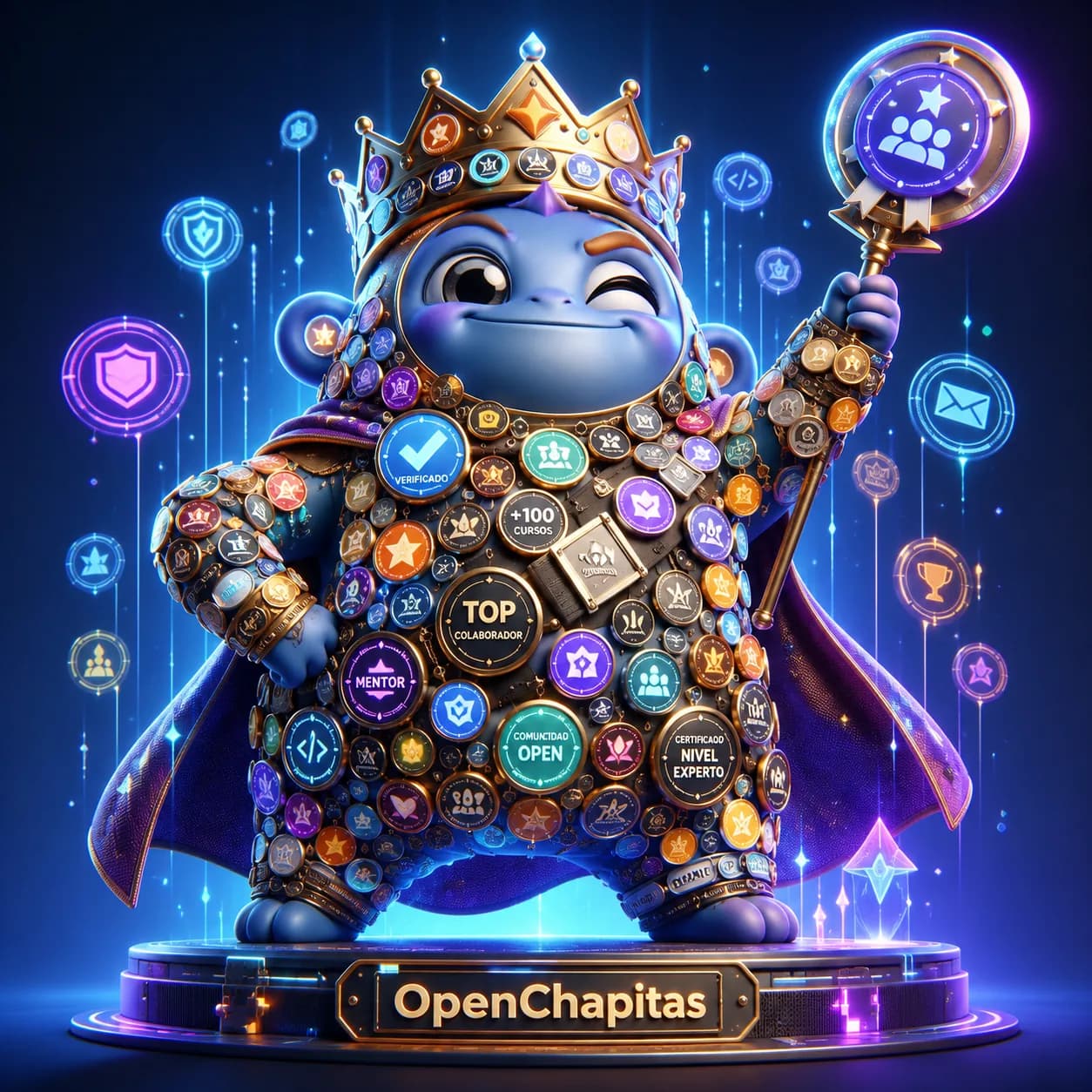
Cada chapita suma — hasta convertirte en leyenda
El sello OpenChapitas, en 3D
¿Tu institución quiere emitir?
Estándar abierto Open Badges 3.0 sobre W3C VC 2.0, con tu propia raíz de confianza did:web. Sin amarrarte a ninguna plataforma.